25+Years of experienceLocal knowledge. Lasting care.
One team, start to finishWaterproofing to restoration
Free project estimatesA clear plan for your home
Yard drainage, downspouts & grading
Yard & foundation drainage to keep water away from your home.
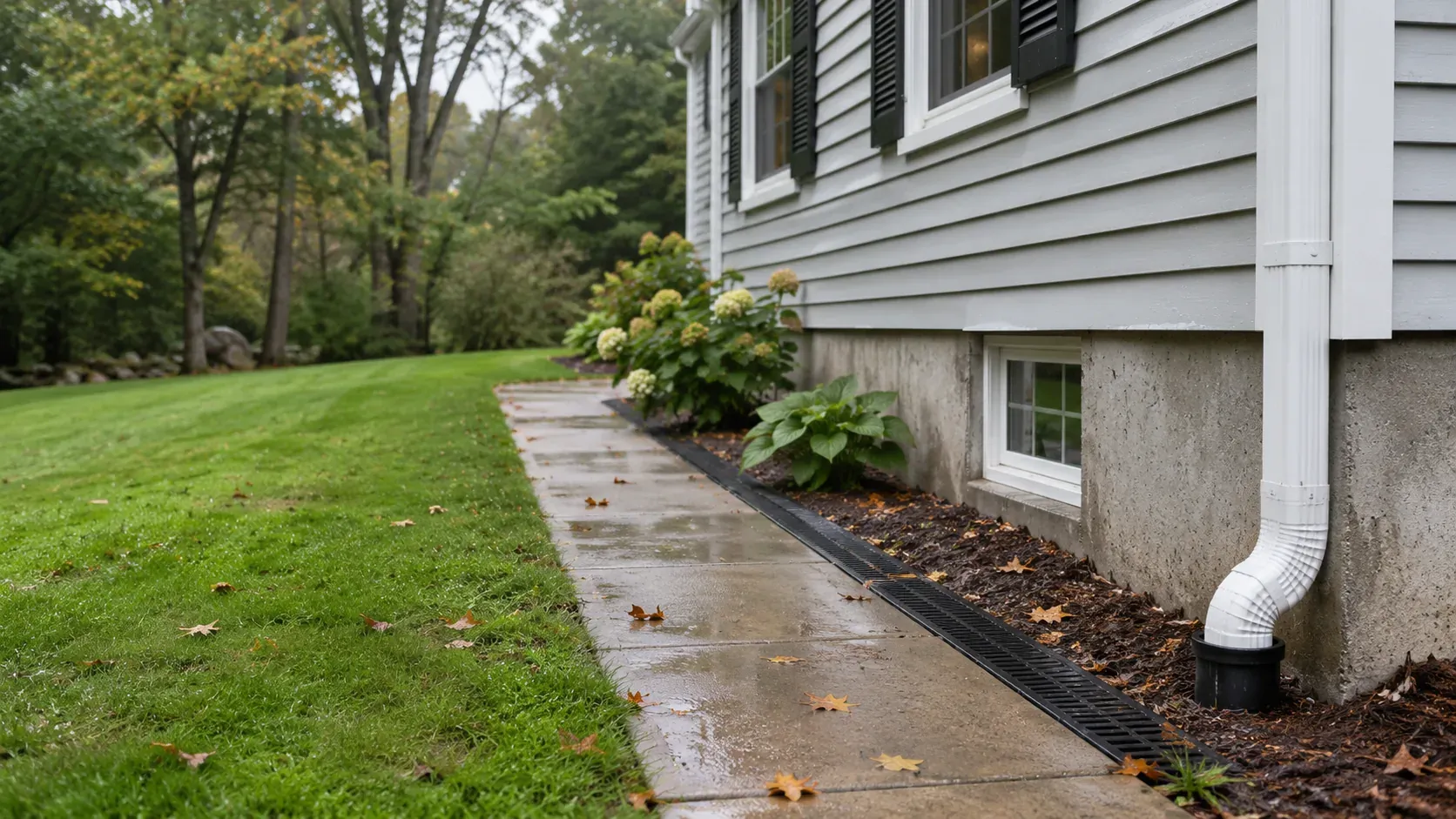
Standing water in the yard often ends up in the basement. We look at runoff, low spots and downspouts, then recommend drainage that moves water out of the way.
Roof runoff, low spots, and ground that slopes toward the house can leave water where you least want it. During heavy rain or snowmelt, those conditions can also contribute to basement leaks.
Advanced Basement Waterproofing provides yard and foundation drainage solutions across Western Massachusetts and Hartford County, CT. We assess the conditions around your home and recommend the work needed to collect, redirect, or keep water moving away.
You don’t have to diagnose it before calling. Tell us where water shows up and when it happens.
Catch runoff at the surface
A place for water to go.
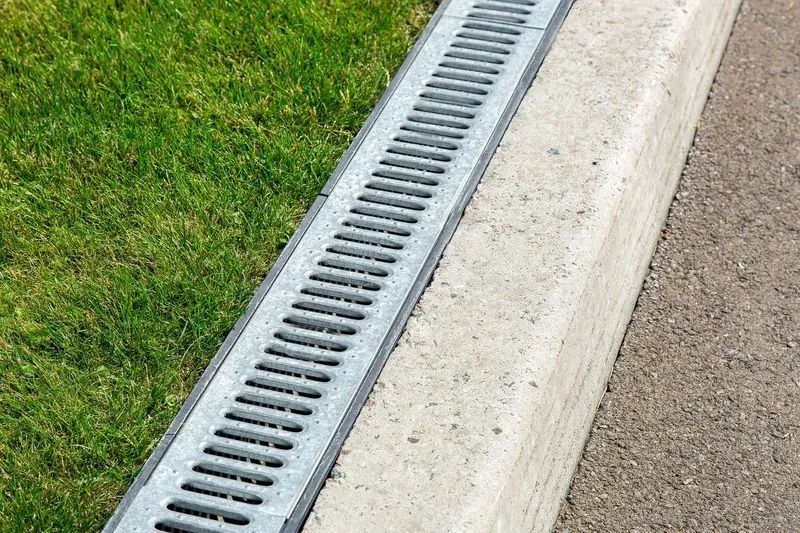
Grated channels and collection inlets can intercept runoff at problem areas around paving or low ground. They need a connected route to a suitable outlet.
The drain location, surrounding slope, and discharge plan should work together.
Five approaches. One property-specific plan.
Match the solution to the water source.
A buried pipe alone does not answer every drainage problem. Here is what the main options are designed to do.
Surface water
Exterior drainage systems
Collect and redirect runoff before it builds up against the home. Channel drains or collection points can be considered where water crosses paving or gathers in a low area.
Discuss: where water collects and how it will reach the outlet.
Below the surface
French drain installation
A gravel trench and perforated pipe collect subsurface water. Placement depends on the yard or foundation conditions and how the collected water will leave the system.
Carry gutter runoff through buried piping to an appropriate discharge point. This can address water that repeatedly pools near the house at the end of a downspout.
Discuss: gutter condition, pipe routing, and access for maintenance.
Pumped water
Sump pump discharge planning
The pump moves water out of the basement; the discharge line needs to carry it to the right place. We evaluate routing that helps keep discharged water from returning to the foundation.
Adjust the ground around the home to encourage surface water to flow away. Where the property cannot provide enough slope, drainage improvements can be part of the same plan.
Discuss: existing elevations, landscaping, and lawn restoration.
The detail that ties the system together
Every drain needs a destination.
The estimate should explain more than where a pipe will be buried. It should explain how the water will leave the problem area.
01
Collect
Identify the water source and the right collection point.
02
Carry
Plan a route that suits the slope, access, and existing systems.
03
Discharge
Choose an appropriate outlet for the property and local requirements.
Ask us to walk you through the proposed outlet, maintenance access, and the areas affected by excavation.
Outside drainage. Inside protection.
Is water already reaching your basement?
Improving runoff outside can reduce the water collecting around a home. Seepage at the wall-floor joint, groundwater beneath the slab, or a leaking foundation crack can call for additional work inside.
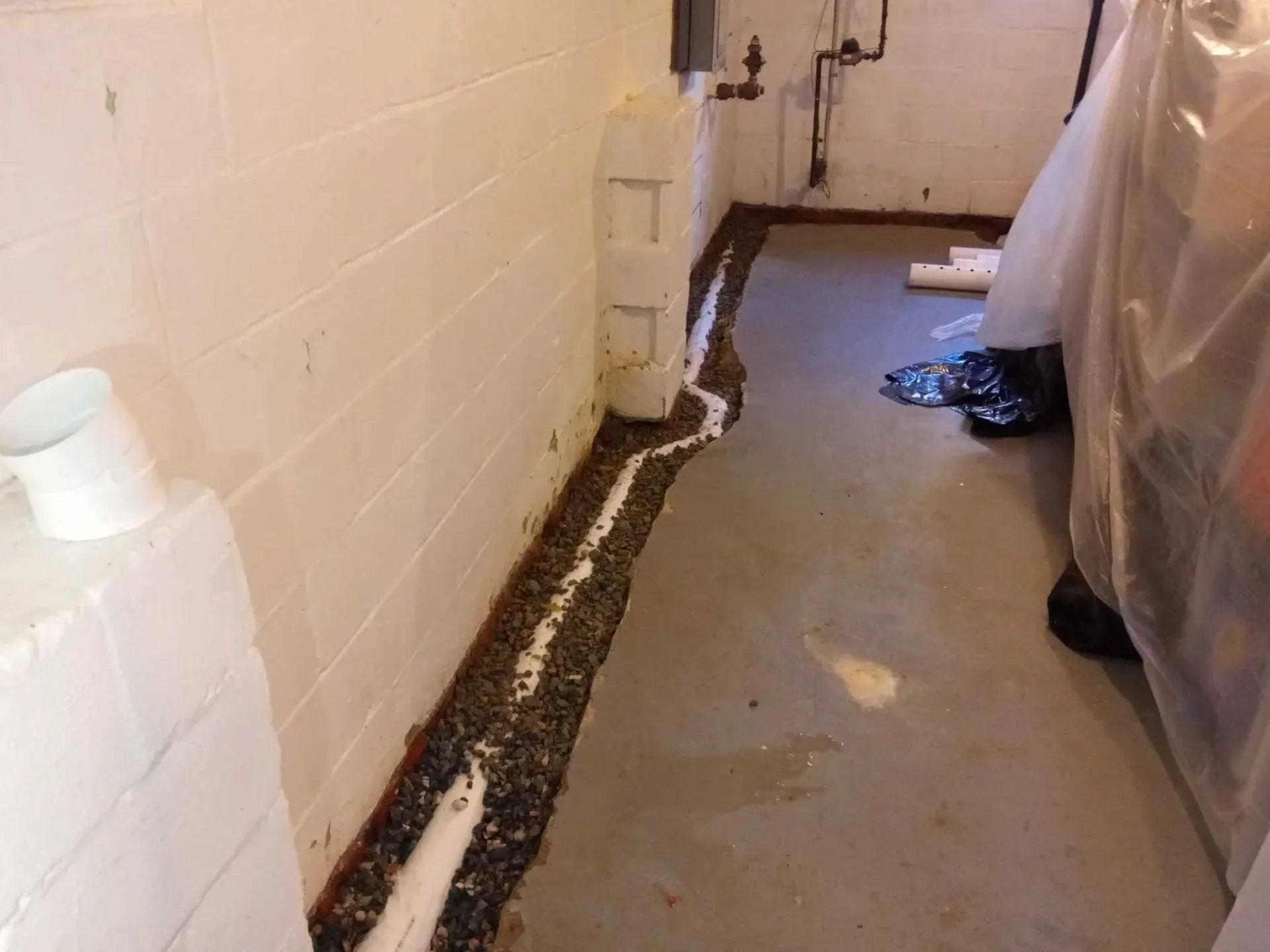
Interior perimeter drainage in progressFrom Advanced’s French drain gallery
Manage water around the home
Roof runoff, surface drains, and grading belong in the outside assessment. The goal is to reduce water collecting near the foundation.
Address the entry point, too
Interior drainage, a sump system, or a crack repair can be considered when the basement has a separate path for water entry.
Point out wet areas, downspout outlets, and any basement leaks. Photos from a recent storm help describe conditions that are dry on the day of your visit.
02
Review the route and recommendation
Your project estimate should identify the system, the outlet, access needs, and any related work. Talk through excavation and lawn or paving restoration before scheduling.
03
Understand the finished system
Review the installed collection points and discharge location. Ask how to keep them clear, what maintenance is needed, and which warranty applies to the proposed work.
Free drainage project estimates
What affects drainage installation cost?
A downspout extension and a property-wide drainage project have different scopes. These details shape the estimate for your home.
System type & drain lengthDepth, soil & site accessDischarge route & outletLawn or paving restoration
We explain the recommended work so you can make a decision with the scope in front of you. Financing options are available.
24/7 Emergency Service
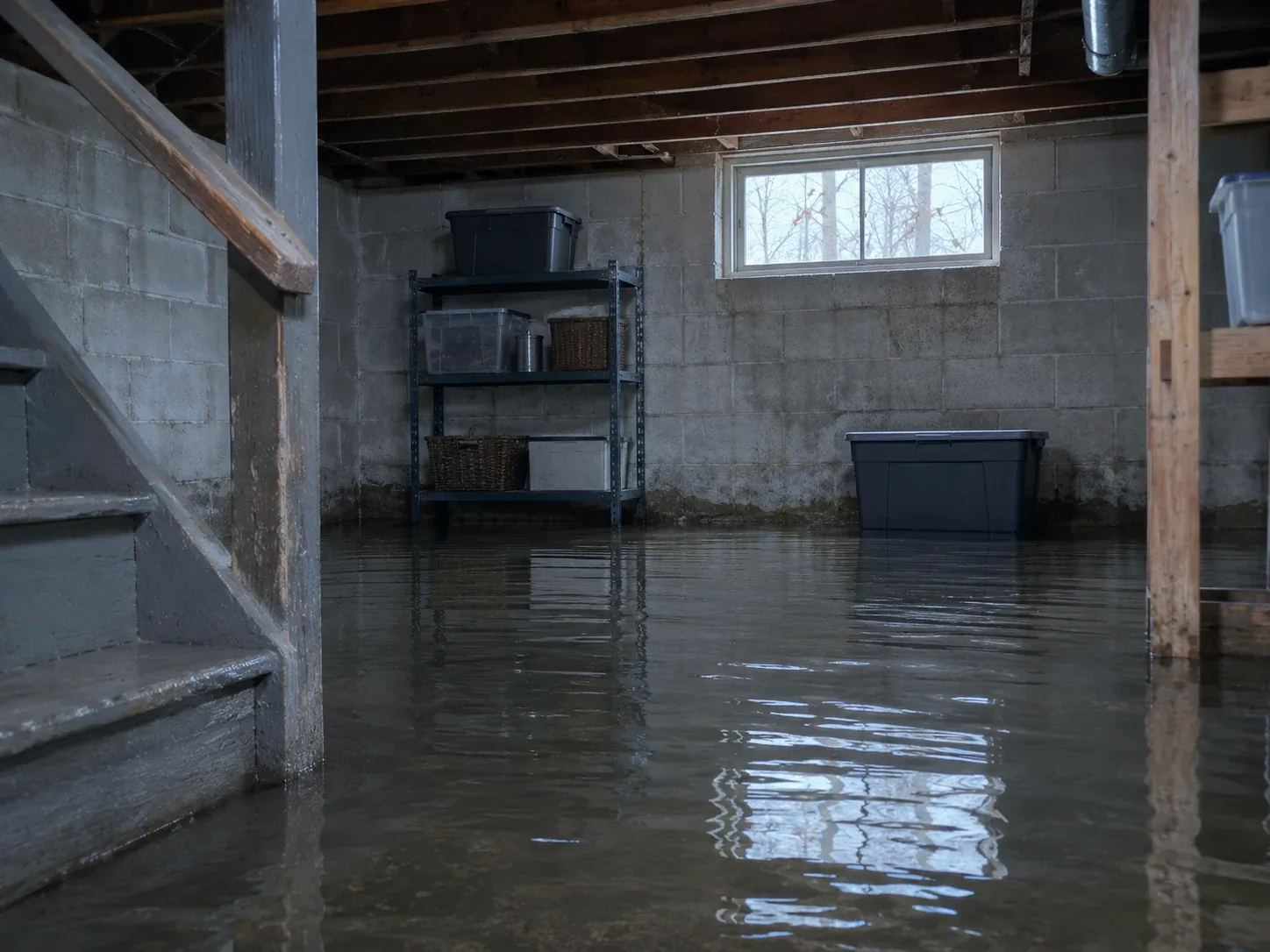
Water in your basement right now?
For flooding or urgent water removal, call our emergency line directly.
If water has affected more than the yard, tell us. Advanced also handles foundation leaks, basement window issues, and restoration, so related needs can be discussed with the same team.
Choosing a system, planning the outlet, and knowing what to expect around your home.
What is the best drainage solution for my yard?
It depends on the water source, the slope of the land, soil conditions, and a suitable discharge location. Surface drains, French drains, downspout extensions, and grading handle different parts of the problem. We review your property and explain which approach, or combination, fits.
What is the difference between a French drain and a surface drain?
A surface drain collects water flowing or pooling above ground through a grate or inlet. A French drain uses a gravel-filled trench and perforated pipe to collect water below the surface. They are not interchangeable, though a property can need both.
Can underground downspout extensions help with a wet basement?
They can help when roof runoff is collecting beside the foundation. The buried line needs an appropriate outlet so the water does not return to the house. If water also enters through cracks or the basement floor, additional waterproofing work should be considered.
Do I need grading, a drain, or both?
Grading changes the surface slope so runoff can move away from the house. A drain collects water where the layout or elevation calls for another route. We look at the existing ground levels and nearby hard surfaces before recommending either approach.
Where will the drainage system discharge?
That is part of the plan, not an afterthought. The proposed outlet depends on site elevations, available space, existing systems, and local requirements. Your estimate should explain the destination and how the route avoids sending water back toward the foundation.
Can you improve where my sump pump discharges?
Yes. Sump pump discharge planning is one of our drainage services. Tell us if the outlet leaves a puddle near the house, if the line backs up, or if water seems to return to the basement. Pump condition and the discharge route both matter.
How much does a drainage project cost?
System type, drain length and depth, access for excavation, the outlet, and restoration of disturbed lawn or paving affect cost. We provide a free project estimate based on your property. Financing is available; ask about current options when you contact us.
Will drainage installation disturb my lawn or driveway?
Some projects require trenching, excavation, or work near paved areas. The proposal should identify the route, access needs, and what restoration is included. Ask about soil, seed, sod, or paving repairs before work starts so the finished scope is clear.
What maintenance will my drainage system need?
Keep visible grates and outlets clear of leaves and debris, and watch how the system behaves after storms. Downspouts, buried lines, and sump discharge routes have different care needs. Ask for maintenance guidance for your installation and report recurring pooling or winter blockages.
Where do you provide drainage services?
We serve Hampden, Hampshire, and Franklin counties in Massachusetts and Hartford County, Connecticut. Call our Massachusetts office at (413) 536-8023 or Connecticut office at (860) 996-8282 for a free project estimate. For active basement flooding, call the separate 24/7 emergency line at (413) 636-0195.
Our service area
Drainage solutions. Western MA & Hartford CT.
We provide drainage solutions throughout Hampden, Hampshire, and Franklin counties in Massachusetts and Hartford County, Connecticut. From Agawam, Chicopee, and Northampton to Enfield and West Hartford, choose your county and town below. View all service areas
Tell us about the standing water, runoff, or basement leak you’re dealing with. Get a free drainage estimate and a plan for your property from the local Advanced team.