
Your sump pump has been making a strange noise, running more than usual, or struggling to remove water from your basement. Maybe it didn't turn on during the last heavy rain, and now you're wondering if something is wrong. The big question is whether you need sump pump repair or if replacing the entire unit would make more sense.
For homeowners in Western Massachusetts and Hartford County, CT, a working sump pump is an important part of keeping basement water under control. Fortunately, not every problem means you need a new pump. Understanding what causes these issues can help you recognize when a repair might be enough and when it's time to consider replacement.
How Does a Sump Pump Work, and What Can Go Wrong?
A sump pump helps remove water that collects beneath your basement floor. It's installed inside a pit called a sump basin, where groundwater and water from connected drainage systems can collect. As the water rises, a float switch activates the pump and tells it when to start. The pump then pushes the collected water through a discharge pipe that carries it away from your home's foundation. Once the water drops to the appropriate level, the pump shuts off until it's needed again.
When something goes wrong, the problem usually involves the pump, the float switch, or the drainage line. A stuck float switch might prevent the pump from starting, while a blockage could keep water from moving through the discharge pipe. The pump's motor can also develop problems as it gets older. These issues don't always require the same solution, which is why it's worth checking the entire setup before making a decision. Advanced Basement Waterproofing provides sump pump installation and replacement services, along with repairs for systems that can be restored to proper operation.
Warning Signs Your Sump Pump Needs Attention
One of the clearest signs of a problem is water rising too high inside the sump basin. If the pump doesn't turn on when the water reaches its normal operating level, something may be preventing it from starting. You might also notice that the pump turns on but struggles to lower the water. These problems deserve attention because the system may not be removing water as quickly as it's entering the basin.
Changes in how your pump runs can also tell you something isn't right. A sump pump may operate frequently during heavy rain or periods of high groundwater, and that isn't necessarily a problem. However, a pump that runs continuously without lowering the water level may be struggling to keep up. Another warning sign is short cycling, which means the pump repeatedly turns on and off within a very short period. Both situations are worth having checked.
Unusual noises, visible rust, and recurring problems can also point to a pump that needs attention. If your sump pump has started making grinding or rattling sounds, or you've already had the same issue repaired several times, it may be time for an inspection. The important thing is to identify what's causing the problem rather than assuming the entire pump has failed.
When Is Sump Pump Repair the Better Option?
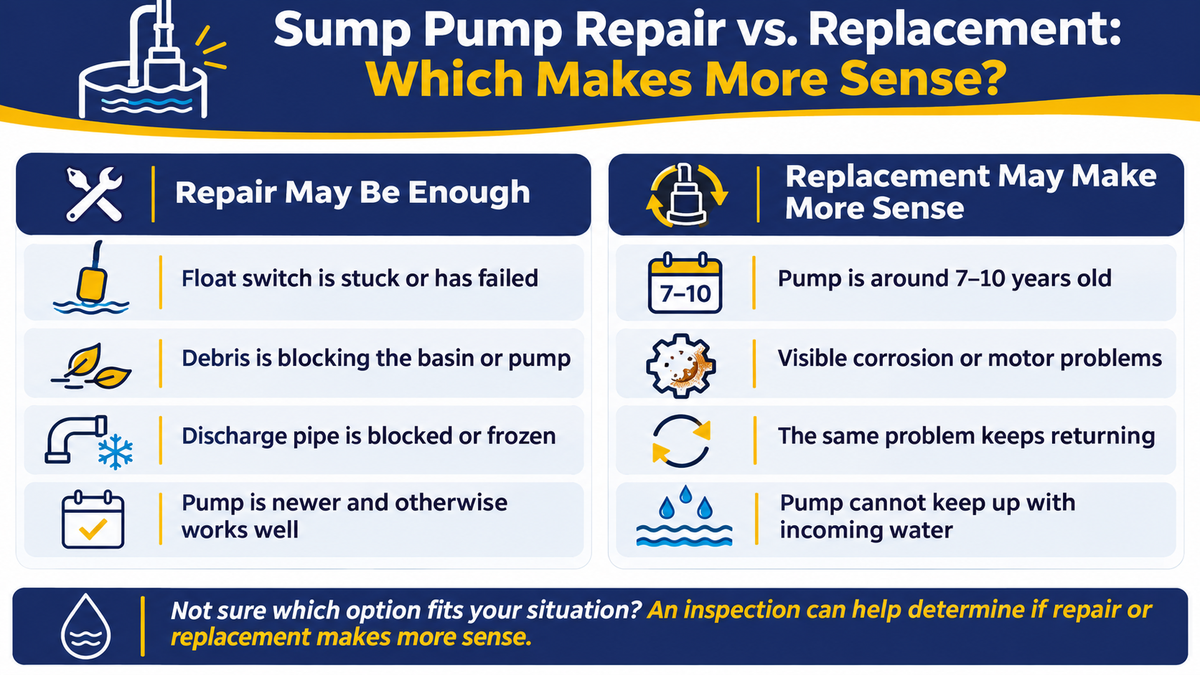
Sump pump repair can be a good option when the main pump is still in good condition and the problem involves a smaller component. For example, a float switch might become stuck or stop working properly, preventing the pump from turning on or shutting off at the right time. Debris in the basin can also interfere with normal operation. Depending on the issue, correcting the switch or clearing an obstruction may restore the system without requiring a full replacement.
Sometimes the pump is working, but water isn't leaving the basement the way it should. A discharge line can become clogged, freeze during cold weather, or send water toward an area where it collects near the house. These problems may require adjustments to the drainage system rather than replacing the pump itself. Advanced Basement Waterproofing offers drainage solutions that address how water moves around your property. Local discharge requirements also matter. For example, Montague, MA, prohibits connecting sump pumps to sanitary sewer lines, so homeowners should confirm the rules in their own town.
It's also worth remembering that a sump pump only removes water that reaches its basin. If water is entering through a foundation crack, basement window, or another opening, repairing the pump won't stop that separate leak. Those issues may require additional basement waterproofing work to address where the water is coming from. Looking at the complete drainage system helps avoid fixing one problem while leaving another untreated.
When Does Sump Pump Replacement Make More Sense?
Age is one factor to consider when deciding if a sump pump should be replaced. Many sump pumps last around 7 to 10 years with proper care, although their lifespan depends on how frequently they run and the conditions they're exposed to. Reaching that age doesn't mean a pump will automatically fail. However, if an older unit starts having repeated problems, replacement may be worth considering rather than continuing to repair individual components.
The condition of the pump also matters. Visible corrosion, a worn motor, or mechanical problems that keep returning can indicate that the unit is reaching the end of its useful life. A pump that runs constantly but cannot keep up with incoming water may also need to be evaluated for the amount of water it can handle. In some cases, the problem is that the existing pump isn't properly suited to the home's drainage needs, and installing a different unit may be the better solution.
Repair and replacement costs should also be considered together. A smaller repair on a newer pump may be all that's needed to get it working properly again. On the other hand, continuing to pay for repairs on an aging unit can become less practical over time. Replacing a pump before it fails can also help avoid the disruption of finding water in your basement during a storm. The right decision comes down to the pump's condition, repair history, and how well it's handling the water entering your home.

Why a Battery Backup Sump Pump Matters During Local Storms
A standard electric sump pump needs power to operate. If the electricity goes out during a storm, the pump stops working even if water continues collecting in the basin. This can become a concern during heavy rain or when melting snow adds moisture to the ground around your home. The pump may be working perfectly before the outage, but without power, it cannot continue removing water.
A battery backup sump pump provides another way to keep water moving when the main power supply is interrupted. These systems typically use a separate battery-powered pump that activates when needed. The amount of time a backup can operate depends on the battery's condition, its charge, the amount of water entering the basin, and how far the water needs to be pumped. Having backup equipment doesn't mean the system can run indefinitely, but it can provide additional protection when electricity isn't available.
Power outages are something homeowners in our region have experienced during major storms. On March 14, 2023, a winter storm left more than 75,000 Massachusetts customers without power, including thousands across the western counties. For homeowners in Springfield and Westfield, MA, as well as Enfield and Windsor Locks, CT, it's worth thinking about what happens to a sump pump when the power goes out. If your basement is already taking on water, Advanced Basement Waterproofing also provides 24/7 emergency water removal to help address active flooding.
What to Expect During a Sump Pump Inspection
When you contact Advanced Basement Waterproofing about a sump pump problem, the first step is understanding what's happening with the system. Our team reviews the condition of the pump, how it turns on and off, and the way water moves through the discharge piping. We also look at the existing basin and drainage setup to identify anything that could be affecting performance. This helps determine if the issue involves a smaller repair, a worn-out pump, or another drainage problem.
After evaluating the system, we can explain the available options and recommend the work that makes sense for your home. If a repair is appropriate, the goal is to correct the problem and restore normal operation. When replacement is needed, the new pump should be selected based on the home's drainage requirements. The installation includes testing the system to confirm that it activates and removes water properly. We can also discuss battery backup options if additional protection during power outages would be useful.
The cost of the work depends on several factors, including the pump being installed, backup equipment, basin conditions, discharge routing, and access to the system. We provide free estimates so homeowners can understand what may be involved before moving forward. Once the system is working properly, regular maintenance can help prevent future problems. Keeping the basin clear of debris, following the manufacturer's testing instructions, and checking backup equipment are all part of taking care of your sump pump.
If your sump pump is making unusual noises, running constantly, or having repeated problems, it's worth having it checked before the next storm. Advanced Basement Waterproofing provides sump pump repair and replacement services throughout Western Massachusetts and Northern Connecticut, with offices in Chicopee, MA, and Enfield, CT. Contact us today to request a free estimate or give us a call at (413) 536-8023 in Massachusetts or (860) 996-8282 in Connecticut. For urgent flooding concerns, our emergency line is (413) 636-0195. You can also explore our service area to see where we work.
Frequently Asked Questions
How Long Does a Sump Pump Usually Last?
Many sump pumps last around 7 to 10 years, but the actual lifespan depends on how frequently they operate and how well they're maintained. An older pump that still works properly may not need immediate replacement, although recurring problems can be a sign that it's time for a new one.
Can a Sump Pump Be Repaired Instead of Replaced?
Yes. Some problems, including a faulty float switch, debris in the basin, or a blocked discharge line, can be repaired without replacing the entire unit. The pump's age, condition, and the cost of the repair help determine which option makes more sense.
Why Does My Sump Pump Keep Running?
A sump pump can run frequently when heavy rain or groundwater is entering the basin. However, if it's running continuously without lowering the water or turning on and off every few seconds, something may be wrong. An inspection can help identify the cause.
Will My Sump Pump Work During a Power Outage?
A standard electric sump pump won't operate when the power goes out. A properly functioning battery backup system can continue removing water using its own battery. How long it runs depends on the backup equipment, battery condition, and the amount of water being pumped.
Does Homeowners Insurance Cover Sump Pump Failure?
Standard homeowners insurance policies generally don't cover water damage caused by sump pump failure or overflow. Some insurers offer optional water backup coverage that may provide protection in certain situations. Check with your insurance company or agent to understand what's included in your specific policy.